

 Dec 27, 2025
 3 min read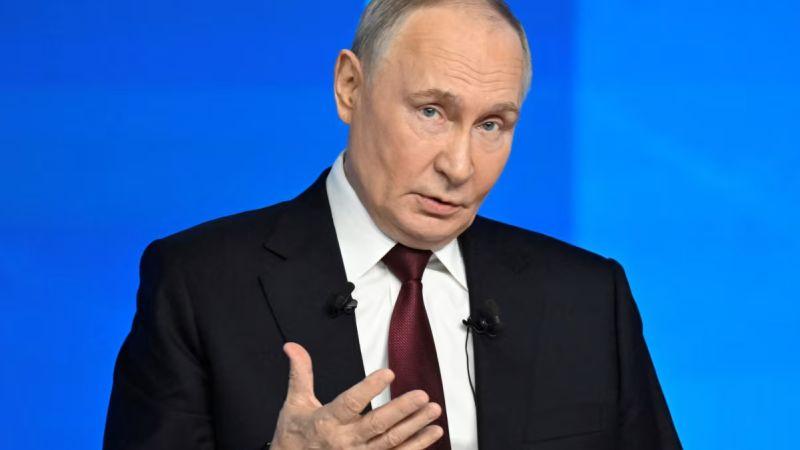
The Russian economy has faced big problems this year: runaway inflation, a growing budget deficit (in part due to huge military spending) and falling revenues from oil and natural gas.
Russia's economy has faced mounting challenges this year: high inflation, a growing budget deficit (in part due to heavy military spending) and declining revenues from oil and natural gas.
The economic development has also decreased a lot.But a looming economic storm is unlikely to bring President Vladimir Putin to the negotiating table to end the war in Ukraine anytime soon.
Analysts say the Kremlin can hold out for years at the current pace of fighting and Western sanctions.
"If you look at the economy itself, it's not going to be the straw that breaks the camel's back," said Maria Snegovaya, senior research fellow for Russia and Eurasia at the Center for Strategic and International Studies (CSIS)."It's not a disaster. It's manageable."
Russia may continue to struggle over the next three to five years, he explained, noting that it is difficult to make a reliable assessment beyond that.
Russian economists in exile, an anti-Putin faction, believe the tug-of-war could last even longer because the Kremlin's ability to wage war is unfettered by economic sanctions.
Richard Connolly of the Royal United Services Institute (RUSI) told CNA that Western protests have not sufficiently dented Russia's economic focus.
"As long as Russia keeps producing oil and selling it at a reasonable price, it will have enough money to get by," said a senior member of the international security team of a UK-based think tank.
"I wouldn't say it's a really rosy outlook for them, but they have enough because the economy is not a factor in Putin's calculus when he's thinking about war," Connolly said.
History shows that Russia is more likely to accept a negative deal if it is facing an economic recession, as happened at the end of World War I and during the Soviet war in Afghanistan, Snegovaya said.
However, the current economic situation "is far from reaching that point, and it will put more pressure on the Russian economy and it will take more time to get to that point," he told CNN.
This is bad news for Ukraine and for the Trump administration, which has had several rounds of talks to try to negotiate an end to the war.
Tax and price increases
What has changed for Russia is that the initial economic boom fueled by increased military spending appears to have ended, and now the Kremlin must shift the burden of the war to Russian society, Snegovaya said.
This social burden has translated into sharp increases in corporate and income taxes and an increase in value-added tax (VAT) to help fund record levels of military spending.
Russian consumers are facing sharp price increases, especially on imported goods.
But Snegovaya believes that, unlike in the West, high inflation “has not caused much social unrest” in Russia, citing the impact of government propaganda and repression.
Like other experts, Connolly also said that inflation in post-Soviet Russia has always been high, so consumers are used to it.The International Monetary Fund has predicted that annual inflation in Russia will average 7.6 percent this year, down from 9.5 percent in 2024.
Russia is spending 40 percent of its money "in fury," noted Russian warlord Mark Reichers.
According to an April report from the Stockholm International Peace Research Institute, this spending increased by 38 percent last year compared to 2023.
Rising costs created a new class of wartime economic "winners," including defense contractors such as arms manufacturers and workers.
As a result, economic inequality in Russia has decreased, which means that Putin is facing less pressure from certain sectors of society, experts say.
As Russia seeks to replace some imports from the West, it has expanded production of textiles, footwear and basic electronics, said Ekaterina Kurbangileva, a visiting scholar at George Washington University who specializes in political and social research, including data on Russian taxpayers.
Their research found that some workers' wages tripled, and in some cases doubled, between 2021, the year before the Russian war began, and 2024.
"It was like a shot of adrenaline," Kurbangaliva said of the boost the war gave to the economy.
Some of Russia's poorest rural areas have also seen an economic boost since the start of the war, thanks to huge paychecks for Russian soldiers and their families. It's a strategy the Kremlin is using to recruit volunteers and avoid widespread conscription to replace those killed on the Ukrainian front.
"Russian troops today are paid more than any other Russian soldier in history," said Connolly of Rusi."They make more money than they could ever hope to do if they had remained in the country's depressed areas and got other jobs in the civil economy."
The Russian government also paid huge compensation to the families of soldiers killed or wounded in the war, Kurbangaliva said.
Partly by injecting money into the military and their families, the Kremlin has managed to quell discontent even as Russian casualties in Ukraine approach one million people, with 250,000 dead, according to a CSIS estimate released in June.
The government avoided the protests seen in the wars in Chechnya and Afghanistan, when families of soldiers recruited from poorer regions of Russia and the Soviet Union called for an end to the wars.
"I don't think the regions have any bearing on support for the war, but the fact that we're not seeing an outbreak of public protests takes the pressure off Putin when he's making decisions about what to do next," Connolly said.
What experts say the Kremlin may be discussing is concern about the return to society of a large group of war veterans, unemployed and with expensive medical needs, if a peace deal is reached.
"It is in Putin's interest to continue this war, even from a domestic perspective," said Kimberly Donovan, director of the Atlantic Council's State Economic Program.
Avoiding sanctions is costly
Although economic barriers are manageable in the short term, they may be different in the long term.
Russia is making extensive use of its sovereign wealth, according to a recent report by the Atlantic Council, generating "a new price for the Kremlin" as a cushion that previously protected the population from the costs of military demobilization.
According to the Kyiv Institute of Economics,The value of liquid or convertible assets in Russia's National Welfare Fund has fallen by 57% since the start of the war.
As resources dry up, "it is difficult to imagine the Russian government being able to maintain its current defense spending without a noticeable reduction in public welfare," the Atlantic Council report said.
In addition, recent US and British sanctions on Russia's two main oil producers, Lukoil and Rosneft, have increased Russia's trade costs, the Atlantic Council's Donovan told CNN.
"They (Russians rude oil producers) Detvertise oil exports by small companies in the country ... This is all costs a lot of money," he said.
If this is combined with tougher sanctions and pressure on India and China to end Russian oil purchases, the Kremlin may eventually turn the tide, he said.
And he added: "The more pressure on Russia with these sanctions, the harder it will be for them to try to avoid them."